
Yeasts: pedigree and properties

Flocculation is the yeasts’ ability to clump together; ale yeast flocculates on the top of the fermentation and lager yeast onto the bottom. High flocculators clump early (about 3-5 days) in the fermentation, which might lead to low attenuation, ie part of the sugars are not metabolized to alcohol. Whisky distillers usually prefer low flocculators, because flocculated yeast is more likely to stick to the heating coils or the still surface (especially when direct heated) producing burnt flavours. Low flocculators often provide better attenuation (sugar utilization) and therefore higher alcohol yields. Filtering the wash before the distillation could be an option when using medium-high flocculators, but it is not apparently used in Scotland. The “on the lees” (ie wash containing the yeast cells) distillation is considered to enhance spirit flavour in both grain and wine spirits, most likely by increased fatty acid ester and methylketone concentrations producing oily, rancio and fruity aromas
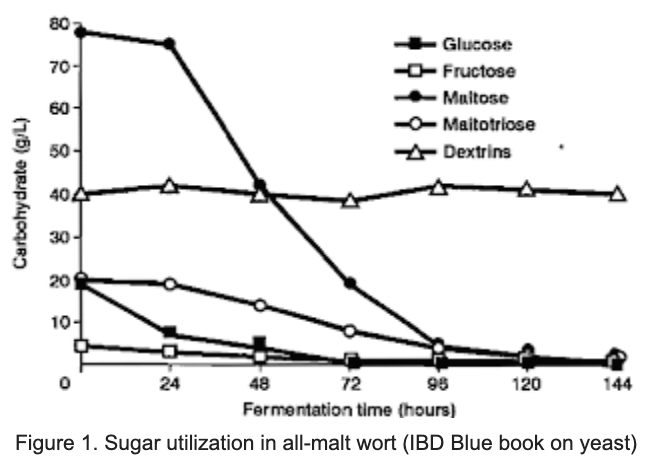
Wort contains various sugars, mostly maltose and its oligosaccharides (maltotriose, maltotetraose, maltopentaose etc), but also glucose, fructose and sucrose. The oligo- and disaccharides (glucose, fructose, sucrose, maltose) are preferred by the yeast (figure 1) and transported inside the cell by diffusion, but maltotriose utilization depends on the yeast’s ability to transport maltotriose into the cell by a spesific enzyme. Effective maltotriose uptake of a whisky yeast is important for optimal alcohol yield. Apparently most whisky yeasts (and brewer’s yeasts) used contain several genes for maltotriose tranport enzymes, probably result from several hybridizations and chromosomal changes.
Alcohol tolerance of yeast depends on the strain and the species. Most domesticated or cultured beverage yeasts tolerate over 10% ABV ethanol concentrations as most non-saccharomyces wild yeasts stop working effectively in 1-5% ABV and die in about 10% ABV as some yeasts used for industrial fuel alcohol production can go up to 23% ABV. In whisky fermentations the factor limiting the final alcohol yield is usually the amount of sugars in the wort as whisky yeast attenuation is usually very good and the primary yeasts tolerate well the 5-8% ABV of a whisky fermentation.
Scotch malt whisky fermentations are not usually temperature controlled (apart from the starting temperature, which is adjusted to the ambient temperature), despite practically all lager brewers and most wine producers use temperature controlled fermetors. Yeast metabolism produces lots of heat, especially when anaerobically producing alcohol. Therefore whisky yeast must tolerate different temperatures, usually from 18-20C to over 33C. Typical whisky distillery yeasts tolerate about 32-34C depending on the ethanol concentration and although some other distilling strains can cope with up to 46C (a Finnish vodka strain), most distillers yeasts produce the best alcohol yield at 20-30C. Flavour compound formation is affected quite heavily by the fermentation temperatures; higher temperature fermentations produce less esters and more higher alcohols.
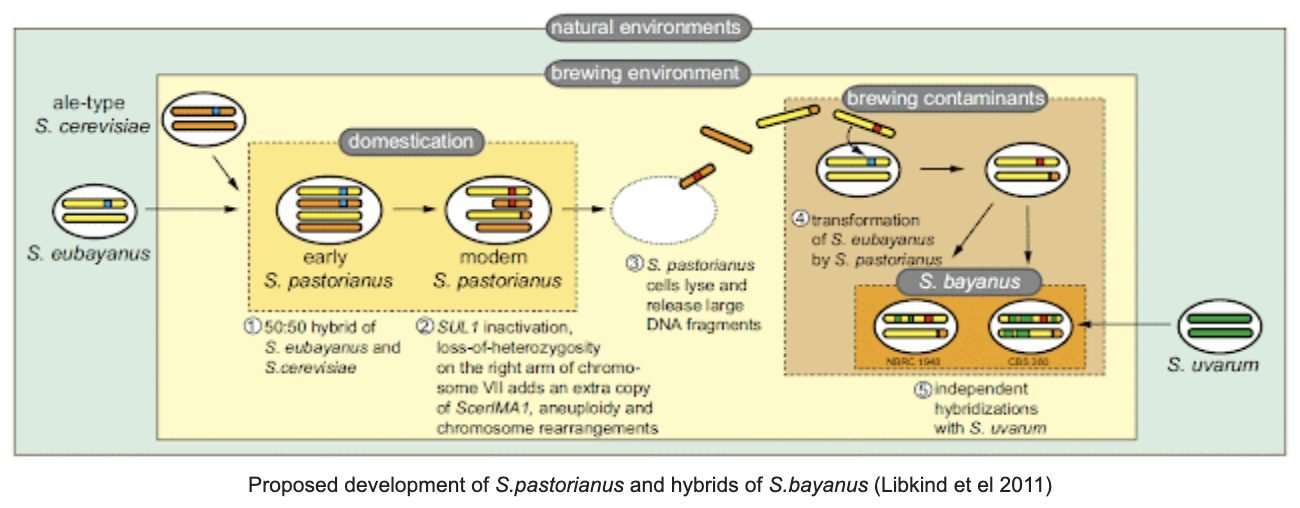
The most used whisky distiller’s yeast in the latter part of the 20th century was a S.cerevisiae strain called DCL M, M-strain, Quest M, Rasse M, M-1, D1 or WH301 manufactured formerly by DCL Yeast ltd and now mostly by Kerry Biosciences (Kerry Group bought Quest Ingredients in 1998). The M-strain was introduced to Scotch whisky distilleries by DCL in 1952, but a similar Rasse M was used widely in German distilleries at least from the 1930s. The name has remained the same although the properties of the strain have changed considerably from the 1930s and there most likely is some variation between different yeast manufactures despite the same name. The M-strain is a intraspecies hybrid of S.cerevisiae (as S.cerevisiae covers the former S.diastaticus species). The first Scottish pure strain whisky yeast was developed in the mid-1920s and before the WW II DCL had pure cultures of “standard” DCL-whisky yeast, DCL S.C. (probably for sugar cane fermentations) and DCL L-3 (probably a variety of the standard DCL). Whether they were used widely in distilleries is not documented, but probably they were used in DCL grain distilleries and in some malt distilleries within a reliable transport route in adjunction with a local brewer’s or baker’s yeast. There is some evidence that the first pure-culture distilling yeasts were being tried in Keith already in the 1870s, but apparently they were never used in larger scale.
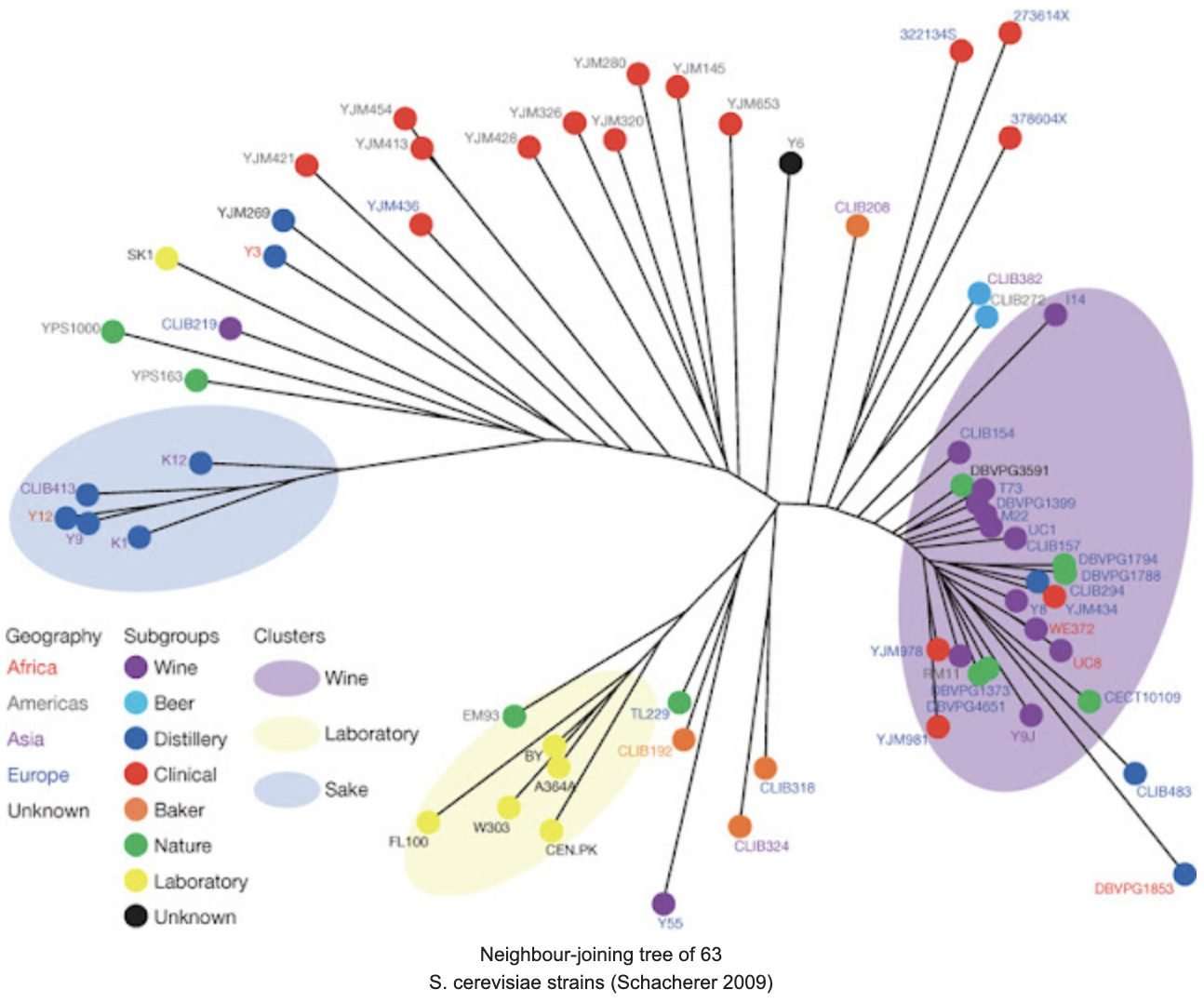
In continental Europe pure yeast cultures were more widely used and there were spesific strains for grain/malt worts (Rasse M, Rasse XII) and rye wort (R-strain) and even a raspberry-flavour producing strain “A”. Also Fleischmann and Brown-Forman in the US had developed their own distiller’s strains by the 1940s. The yeast strains of European, Asian and American distillers seem to be quite different at least by their genetics (see pic below), but there is no scientific data available for differences in spirit quality or flavour. The most similar beer yeasts compared to current Scottish whisky yeasts are probably some Belgian trappist and German hefeweisen yeasts, which are low flocculators, high attenuators, very alcohol tolerant and often produce smoky-spicy aromas associated with 4-vinyl-guaiacol production typical for S.cerevisiae var diastaticus, which is considered to have contributed strongly to the development of the M-strain from the ale-type S.cerevisiae.
The M-strain ruled the Scottish whisky industry from 1960s to 1980s, although many distilleries used ale brewer’s and/or baker’s yeasts in adjunction with it. Before WW II most distilleries propagated their yeast on site, but during 1950s the production was largely outsourced to yeast factories and breweries. The availability of cheap (used/surplus) ale yeast diminished as lager became more popular in UK and as there were claims that using brewer’s yeast dimished the alcohol yield, many distilleries started using pure cultures in the 1980s. As said before, the properties of the M-strain probably changed considerably during the latter part of 20th century, primary goals being higher alcohol yields and the preservation of traditional (or neutral) flavour profile.
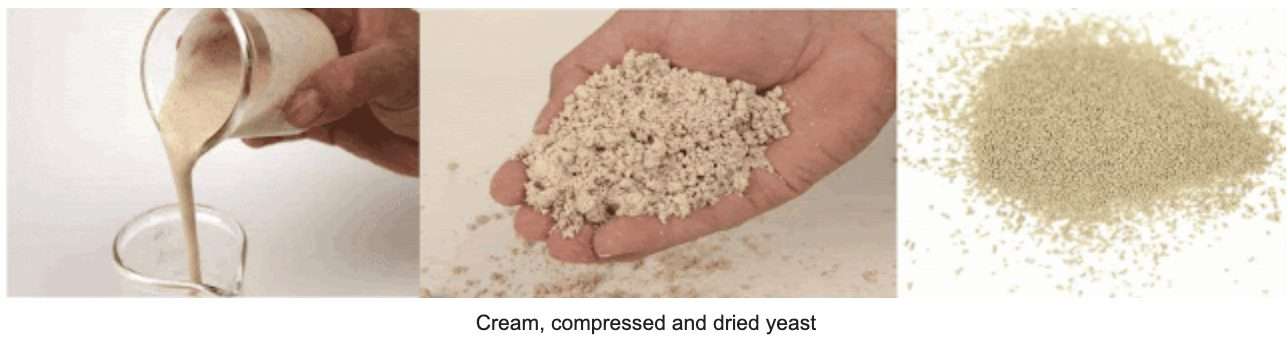
Another significant development was the development of active dry yeast (ADY or instant dry yeast IDY) during the WW II to provide longer shelf life by basically drying the yeast into small pellets rather than just a big clump. This enabled the transportation of yeast into remote locations of Scotland, too. Some Scottish malt distilleries still use dried (95% solids) or more often compressed (25-28%) bag yeast. Cream yeast (17-23% solids) was introduced in 1983 to provide easy delivery by tank trucks and automated pitching, which was important and practical for bigger plants.
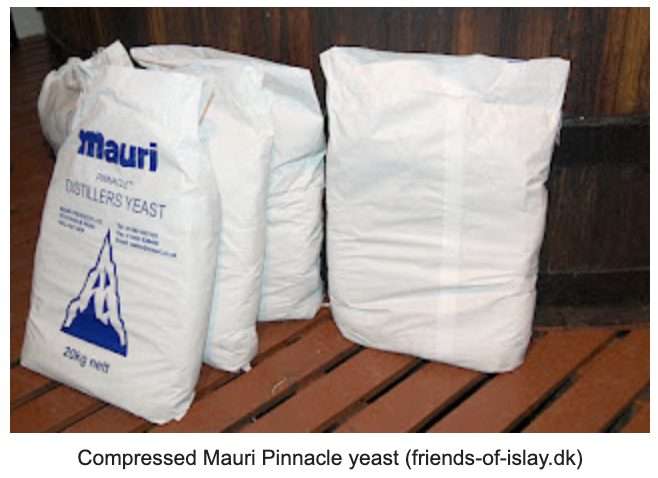
The MX-strain developed in the 1990s is a bit faster fermenter and produces a very similar flavour profile compared to the M, according to the manufacturer Kerry Group. The MX is faster and more efficient especially in high gravity worts which are preferred because of the savings in heating and water costs. Another common malt whisky yeast is Pinnacle by Mauri, which is an ethanol tolerant baker’s yeast (S.cerevisiae) and actually slightly faster than MX, reaching peak fermentation speed about 1 hour earlier (at 15hours of fermentation) than MX. The grain distilleries use mostly cream yeast of undisclosed strain, produced by British Fermentation Products (BFP) or Anchor Yeast. In the table below you can find information about the yeast strain used by some Scottish distillers.
| M | MX | MAURI | BREWER’S + DISTILLER’S | ANCHOR/BFP |
| Aultmore | Bowmore 25% (+Mauri) | Aberlour | Ben Nevis (50/50) | Auchentoshan (+Mauri) |
| Blair Athol | Bruichladdich | Ardbeg | Balblair | Daftmill |
| Bruichladdich (+Mauri) | Bunnahabhain | Auchentoshan (+Anchor) | Benromach | Grain distilleries |
| Bunnahabhain | Craigellachie (+Mauri) | Benrinnes | Cardhu | |
| Glengoyne (+MX) | Glengoyne(+M) | Bowmore 75% (+MX) | Glenburgie | |
| Glen Scotia | Lagavulin (+Mauri) | Bruichladdich (+M) | Glenmorangie (5dist, 2brew) | |
| Highland Park | Speyside (+M) | Caol Ila | Imperial | |
| Lagavulin (+Mauri) | Craigellachie (+MX) | Jura | ||
| Macallan (+Mauri+brewers) | Dalwhinnie | Longmorn | ||
| Speyside (+MX) | Glenfiddich | Macallan (+M+Mauri) | ||
| Lagavulin (+M) | Miltonduff | |||
| Laphroaig | Oban | |||
| Macallan (+M+brewers) | Speyburn | |||
| Strathmill (+brewers) | Strathmill (+Mauri) |
Yeasts used by some Scottish whisky distilleries (Udo 2006)
The use of brewer’s yeast as a secondary yeast strain produces more sulphury compounds into the wash and less fatty acid esters, especially when using dry ale yeasts. As brewer’s yeast attenuates or even dies earlier than distiller’s strain, the use of secondary strain increases the growth of lactic acid bacteria (LAB) towards the end of fermentation, which in turn lowers the pH of the wash altering the distillation process and produces specific flavours depending on the bacteria strain. One LAB strain might produce for example vinyl-guaiacol (smoky-spicy), as another produces damascenone (floral). Practically all the LAB growth results in more esters into the new-make, especially hexanoate and octanoate and decreased ethanol yield.
Because Scottish distillers at the present time use very similar primary yeasts, the selection of the strain of distiller’s yeast is a minor factor in terms of flavour profile, at least when compared with other aspects of fermentation, such as original wort gravity, fermentation time and temperature and the material and microflora of washbacks.
In the future the whisky industry is looking to develop yeast strains suitable for higher gravity worts, shorter fermentation times and better utilization of maltotetraoses and -pentoses. Hopefully the flavour issues are also considered in the process and different strains are studied for improved flavour profiles.
REFERENCES AND FURTHER READING:
Dunn B, Sherlock G. Reconstruction of the genome origins and evolution of the hybrid lager yeast S.pastorianus. Genome Res 2008;18;1610-1623
Landry CR et al. Ecological and evolutionary genomics of S.cerevisiae. Molec Ecol 2006;15;575-591
Piggott JR et al (ed). The science and technology of whiskies. Longman 1989
Udo M. The Scottish Whisky Distilleries. Black & White 2006
Schacherer J et al. Comprehensive polymorphism survey elucidates population structure of Saccharomyces cerevisiae. Nature 2009;458;342-346
Sipiczki M. Interspecies hybridization and recombination in Saccharomyces wine yeasts. FEMS Yeast 2008;8;996-1007
Suomalainen, H & Lehtonen, P. The production of aroma compounds by yeast. J Inst Brew 1978;85;149-156
White C, Zainasheff J. Yeast. Brewers Association 2010
Inside the Cask Note: in order to preserve the information shared on the excellent Whisky Science website, I am reproducing some of their articles on Inside the Cask. I have tried to find the author (Teemu Strengell) in order to contact them to ask for authorisation but this has not been possible so far.



0 Comments