
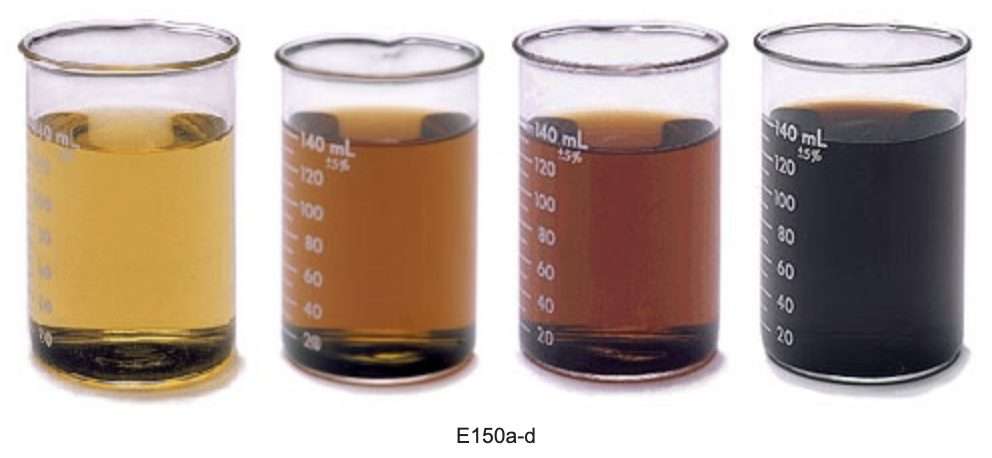
Caramel E150
Spirit caramel (E150) is allowed as a colouring agent in Scotch whisky production. There are four different types of E150, labeled from a to d, or from class I to IV, according to the manufacturing process used. E150a (plain caramel) is “prepared by the controlled heat treatment of carbohydrates (commercially available food grade nutritive sweeteners which are the monomers glucose and fructose and/or polymers thereof, e.g., glucose syrups, sucrose, and/or invert syrups, and dextrose).
To promote caramelization, acids, alkalis and salts may be employed” (not ammonium compounds or sulphites). Sulphites are allowed in the production of E150b (caustic suphite caramel), ammonium compounds are allowed in the process for E150c (ammonia caramel) and both suphites and ammonium compounds are allowed in the process for E150d (sulphite ammonia caramel). Common raw materials for caramel colourings are corn syrups, wheat, glucose syrup or sucrose. Additives may include a variety of acids, alkalis and salts. Different raw materials produce different caramels and the use of additives influences the resulting color, viscosity, ionic charge and pH and there are hundreds of different spirit caramels available from several producers.
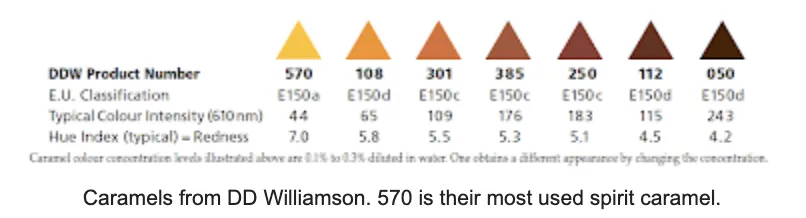
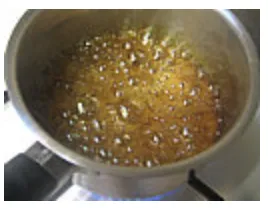
Most caramel colourings are very dark in color and are usually used in tiny quantities. Fructose produces the darkest color, probably because it starts to caramellisate in 110ºC, as sucrose, glucose and galactose caramellisate in 160ºC and maltose in 180ºC. Viscosity varies, but in general low viscosity caramels are used in beverages. The ionic charge of caramel is important because of possible flocculation. For example, if negatively charged caramel is added to positively charged beverage, there will be some flocculation or even percipitation.

Correctly selected caramel colouring has some emulsifying properties, in other words it helps the oils to mix with the water. In fact, the Coca Cola Company first patented the caramel colouring as an emulsifying agent, not as a colourant. Whisky and most soft drinks are negatively charged, but beer, baked goods and herbal liqueurs have usually a positive charge. E150c is positively charged and used in breweries and never in whisky. E150a has the best stability in high proof alcohols, especially when the raw material has been sucrose. Wheat and corn based syrups are widely used, but they are usually less stable in alcohol. E150a can tolerate up to 75% abv as most E150d is guaranteed to work up to 50% or 60% abv. E150b is used in the presence of tannins, especially in sherries, wines and some brandies and the residue sulphites of E150b probably also help to preserve the wine from excess oxidation. The amount of caramel varies, in spirits it is usually about 0,1-0,5% or about 1-5g/litre as in comparison some 0,4% of E150d is used in cola soft drinks, 0,01-0,3% of E150c in beers and up to 10% of E150d in (cheap) cocoa powders. EU (EFSA) recently lowered the acceptable daily intakes (ADI) for caramels; 300mg/kg/day for E150 and 100mg/kg/day for E150c, so a man weighing 80kg is allowed to consume 24g of caramel color a day. Hopefully not many of us get that from blended whisky, but probably some will get those amounts from cola and bakery stuffs.
Most producers give caramel colors a two year shelf stability guarantee, if stored in room temperature and protected from sunlight. Sunlight fades the caramel colors rapidly, in matter of weeks to months. E150a is the most resistant to fading and it fades evenly in all wavelenghts, as E150d usually fades more of the higher wavelenghts (red fades first).
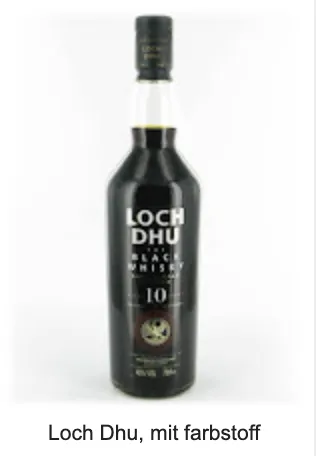
The majority of single malts and virtually all the blends are coloured with E150a. According to The Scotch Whisky Regulation in 2009 only “plain caramel” (E150a) is allowed, although the EU laws permit the use of “spirit caramel”, which is not exactly defined in law and can be any E150 and so at least some E150b and E150d could have been used in Scotch whiskies.
Due to the variety of raw materials and additives, the chemical structures of caramels are complex and there are lots of variations even between caramels of the same subgroup. In the production the main reaction is dehydration as water (hydrogen and oxygen) is extracted (boiled) out of the sugars. This results first to sugar monomers as polysaccharides (for example sucrose) are divided into glucose, fructose, galactose, xylose and maltose.
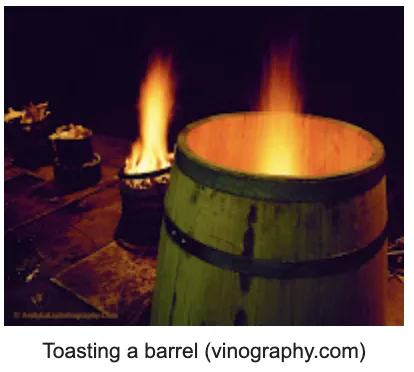
As the heating continues, the monosaccharides lose water and react with each other producing big polymers, mainly caramelans (C24H36O18), caramelens (C36H50O25) and caramelins (C125H188O80), which give the caramel most of its color. Additionally some residue sugar may be left in the product and several flavour components are produced, for example different furans, diacetyl, maltol, esters and lactones. Furans are probably the most influential flavour components in most caramels, they are formed especially from fructose or sucrose (containing fructose) in acidic encironment. They also form during the toasting of oak barrels, but the relative amounts of different furans are different as the raw material are either lignin and (hemi)cellulose in oak or simple sugars in caramel.
Caramellisation of simple sugars produce less furfural (almond, walnut, grainy) and more 5-hydroxymethylfurfural (butter, musty, waxy, caramel) than caramellisation of oak (there are also significant differences between different oak species, see previous blogs). 5-HMF is not produced if sulphites or ammonium are used in the process (E150b or E150d), but is formed in large quantities in the plain caramel (E150a). 5-HMF is also used as a flavour enhancer in milkpowders, honey, juices and even cigars.
Furfural acts as a reactant with various compounds in the spirit; it has some antioxidative properties that slow the oxidation reactions and help to stabilize the color from antocyanins (in especially wine), it also reacts easily with H2S (rotten eggs, nasty sulphur) producing furfurylthiol (strong coffee), decreases the volatile sulphur compund concentrations and potentiates the odor of oaklactone (vanilla,coconut). Some other furans such as hydroxyacetylfuran (sweet), hydroxydimethylfuranone (also known as furaneol, additive in baked bread, coffee and chocolate) and dihydroxydimethylfuranone are also produced. Diacetyl imparts a buttery (butterscotch) flavour and maltol (aka E636) gives freshly baked bread aromas. Esters and lactones (here from sugar, not oak) are usually fruity. Also increased levels of E2-nonenal (cardboard, stale beer) and less hop flavour are also found in caramel coloured beers, but this possibly results from changes in fermentation process and is not studied properly in spirits.
So, caramel does affect the flavour and it is not inert in whisky, but are the quantities used in Scotch whisky industry enough to affect the overall flavour significantly? No reliable scientific fact exists, but my guess is that they probably are significant. Does caramel impair the flavour? It could, but then again in some cases caramel might even improve the taste.
References and further reading:
Abalos D et al. The use of furfural as a metabolic inhibitor for reducing the alcohol content of model wines. Eur Food Res Tech 2011;232;663-669
Blanchard L et al. Formation of furfurylthiol exhibiting a strong coffee aroma during oak barrel fermentation from furfural released by toasted staves. J Agric Food Chem 2001;49;4833-4835
Boscolo M et al. Spectrophotometric determination of caramel content in spirits aged in oak casks. J AOAC Int 2002;85;3;744-750
European Union Directive 95/45
Furukawa Suarez A et al. Impact of colour adjustment on flavour stability of pale lager beers with a range of distinct colouring agents. Food Chem 2011;125;850-859
Laws DRJ, Peppard TL. The stability of flavour constituents in alcoholic beverages. Food Chem 1982;9;131-146
Quesada Granados J et al. Influence of aging factors on the furanic aldehyde contents of matured brandies: aging markers. J Agric Food Chem 1996;44;1378-1381
Ratsimba V et al. Qualitative and quantitative evaluation of mono- and disaccharides in D-fructose, D-glucose and sucrose caramels by gas-liquid chromatography-mass spectrometry di-D-fructose dianhydrides as traces of caramel authenticity. J Chrom A 1999;844;283-293
Rodriguez Dodero MC et al. Phenolic compounds and furanic derivatives in the characterization and quality control of brandy de Jerez. J Agric Food Chem 2010;58;990;997
Scotch Whisky Regulations. Scotch Whisky Association 2009.
Sousa A et al. Isolation and structural characterization of antocyanin-furfuryl pigments. J Agric Food Chem 2010;58;5664-5669
Tsai PJ et al. Interactive role of color and antioxidant capacity in caramels. Food Res Int 2009;42;380-386
www.caramel.com (DD Williamson)
www.sethness-roquette.com
Inside the Cask Note: in order to preserve the information shared on the excellent Whisky Science website, I am reproducing some of their articles on Inside the Cask. I have tried to find the author (Teemu Strengell) in order to contact them to ask for authorisation but this has not been possible so far.




0 Comments