

The New National Standard of Chinese Whisk(e)y makes its debut and this is just the beginning of the journey – a guest blog post by Nené hu (LinZi Whisky)
Since the early 20th century, the whisk(e)y industry in China has been on an upward trajectory, with a flurry of whisky distilleries springing up in recent years. Shaped by China’s rich culture, unique geography, diverse climate, and deep – rooted heritage, the era of Chinese whisk(e)y has begun.
As of September 2024, according to the Whisk(e)y Professional Committee of the China Alcoholic Drinks Association, there are 45 whisk(e)y distilleries across China (including mainland China and Taiwan), with 26 in production, 1 is in trial operation phase, 10 are under construction, and 8 are in preparation.

At the beginning of 2025, the State Administration for Market Regulation and the Standardization Administration of China officially released GB/T 11856.1-2025 “Quality Requirements for Distilled Spirits – Part 1: Whisk(e)y”, which will come into force on February 1, 2026.
This marks the third revision of China’s whisk(e)y national standard, signifying an important milestone in the upgrading of the Chinese whisk(e)y industry.

Definition and Classification of Whisk(e)y
The new national standard keeps the definition of whisk(e)y consistent with previous standards, explicitly stating that whisk(e)y is a distilled spirit made from grains, undergoing processes of mashing, fermentation, distillation, aging, and may or may not undergo blending. The new standard also adds a definition for “flavored whisk(e)y,” which is made by adding natural flavors or essences to whisk(e)y, and may include sugar or not. This can be classified either as distilled spirits or compounded spirits. Moreover, flavored whisk(e)y is clearly defined as either a distilled spirit or a compounded spirit.

New Horizons in Production Process Control
The 2025 national standard introduces new production process controls to enhance the quality of Chinese whisk(e)y, ensuring higher standards and better protection for consumers:
- Alcohol Content Requirement: The maximum alcohol content of new whisk(e)y must be less than 95% ABV.
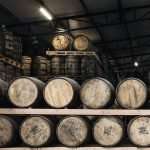
- Aging Time: It specifies that single malt whisk(e)y must be aged for no less than 3 years, and must be aged in oak barrels.
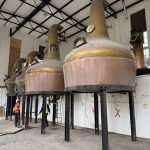
- Production Process: Single malt whisk(e)y production must not use external enzymes, and copper pot stills must be used for 2-3 distillations. During aging, no oak chips or oak staves can be added. For grain whisk(e)y, the minimum aging time is 2 years, and if oak chips are used, this must be indicated on the label.
- Barrel Volume: The volume of the aging barrel for whisk(e)y should not exceed 700L.
- Prohibition of Additives: During production, no food-grade essences may be used, and only caramel coloring can be used to adjust the color. Other coloring agents and flavoring materials must not be used, except in flavored whisk(e)y.

Sensory and Chemical Requirements
The new standard also establishes strict guidelines on sensory and chemical qualities:
- Total Acid: Premium whisk(e)y should have a total acid (calculated as acetic acid) of at least 0.3g/L (100% ABV), while first-grade whisk(e)y should have at least 0.1g/L.
- Total Ester: Premium whisk(e)y should have a total ester (calculated as ethyl acetate) of at least 0.2g/L (100% ABV), while first-grade whisk(e)y should have at least 0.1g/L.
- Total Aldehyde: The total aldehyde content should not exceed 0.5g/L (100% ABV).
- Higher Alcohols: The content of higher alcohols should not exceed 6.0g/L (100% ABV).
Regarding occasional suspended particles or sediments in whisk(e)y, while the standard requires these not to appear, it acknowledges that under certain transportation and storage conditions, small particulate matter may form due to temperature fluctuations. When the temperature returns to the proper range, the particles will gradually disappear.

Labeling Requirements
The new standard makes detailed labeling requirements to ensure consumers can clearly understand the composition and quality of whisk(e)y:
- Age Labeling: Whisk(e)y products must label the age, i.e., the minimum aging time of the raw spirit in the barrel.
- Grain Whisk(e)y: If any grain in the whisk(e)y makes up more than 51% of the recipe, it must be specified on the label (e.g., rye whisk(e)y or sorghum whisk(e)y). If no single grain exceeds 51%, it should simply be labeled as “grain whisk(e)y.”
- Oak Chip Usage: If oak chips are used in grain whisk(e)y or blended whisk(e)y production, this must be clearly indicated on the label.
- Flavored Whisk(e)y Sugar Content: If the sweetness of flavored whisk(e)y (calculated as reducing sugar) exceeds 5g/L, the total sugar content (calculated as reducing sugar) or its range must also be labeled.
The new standard also provides detailed production process guidelines for single malt whisk(e)y, covering raw materials, malt production, mashing, fermentation, distillation, aging, and blending to ensure high-quality whisk(e)y production.

Looking Forward to a Bright Future for Chinese Whisk(e)y
With these new standards, we can expect a significant improvement in the quality of Chinese whisk(e)y. These developments promise to not only elevate the quality of domestic products but also create opportunities for Chinese whisk(e)y to expand into global markets. The future is bright for Chinese whisk(e)y, and it will be exciting to see more locally produced whiskies alongside international brands, bringing the rich flavor of China to the world stage.



0 Comments